How to Choose the Best Skin Hook for Your Needs?
Choosing the best Skin Hook begins with the procedure, not the product photograph. A delicate eyelid repair may require a fine, atraumatic tip, while wound exposure can demand stronger holding power. The right instrument should support controlled tissue handling without unnecessary pressure.
Small details matter. Consider the number of prongs, hook depth, tip sharpness, shaft length, and handle shape. A two-prong design may provide focused traction, while a broader option can distribute force more evenly. The working angle should match the surgeon’s reach and the operating field. Poor balance becomes noticeable during long procedures.
Comfort matters too.
Experienced clinicians also assess stainless-steel quality, surface finish, corrosion resistance, and compatibility with approved cleaning methods. Reusable instruments need reliable sterilization guidance from the manufacturer. Disposable models may offer convenience, but packaging integrity and intended use still require careful checking. These choices should follow institutional protocols and qualified medical advice.
There is no universal “best” Skin Hook. A design that feels precise in one hand may feel awkward in another. That judgment can be difficult to measure, and personal preference should not replace verified specifications. Product claims deserve scrutiny. Look for established manufacturers, clear technical information, traceable quality standards, and practical feedback from trained professionals. Before purchasing, compare the instrument with the tissue type, procedure length, visibility needs, and handling technique. A short trial may reveal more than a polished catalog image. The ideal choice is controlled, comfortable, and appropriate for its documented clinical purpose.
Understanding Skin Hook Types and Their Intended Uses
How to Choose the Best Skin Hook for Your Needs?
Understanding Skin Hook Types and Their Intended Uses
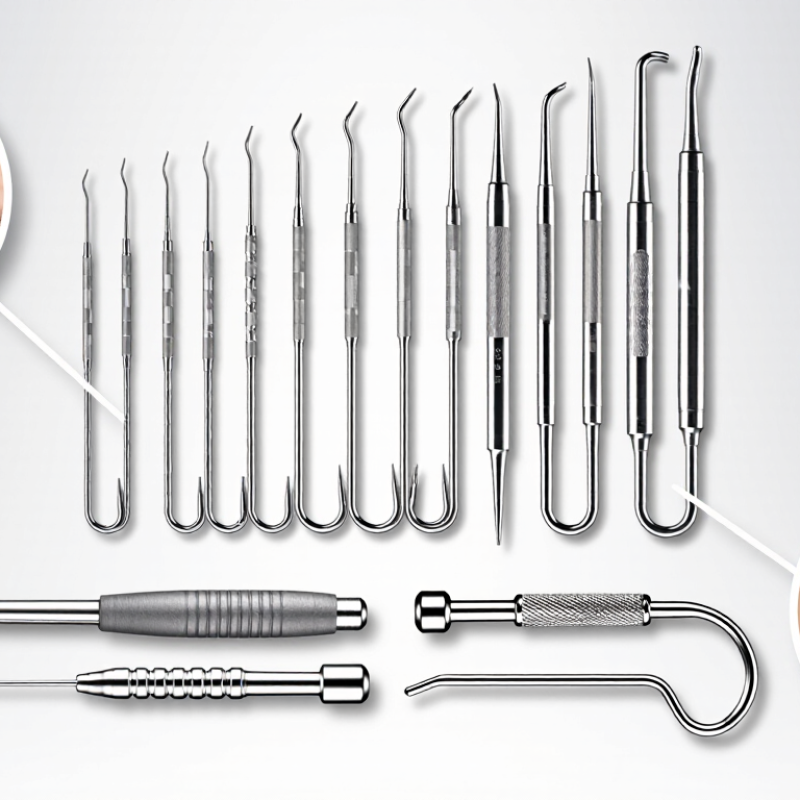
A skin hook is a small surgical instrument designed to hold or gently retract skin edges. Its shape determines how it interacts with tissue. Single-prong hooks offer focused control in narrow areas. Double-prong hooks distribute traction across a wider edge. Sharp prongs provide a firmer grip, while blunt prongs may reduce tissue marking during delicate handling. The correct type depends on the procedure, tissue quality, and required visibility.
Angled hooks can improve access around curved or recessed sites. Straight hooks often suit open, direct approaches. A fine hook may help with thin skin, but it can concentrate pressure too strongly. Larger hooks can spread force, yet they may obstruct a small operating field. Handle balance matters too. A secure, comfortable grip supports controlled movement and reduces hand fatigue during longer procedures.
Material quality, surface finish, and sterilization compatibility deserve careful review. Reusable instruments should resist corrosion and maintain smooth, undamaged prongs. Inspect each hook under bright light before use. Even a tiny bend can change tissue pressure. A common selection mistake is choosing by size alone. I have also seen ergonomic preferences outweigh tissue needs, which is not always wise. Qualified clinicians should match the hook to the operative plan and follow facility protocols, because “gentle” handling depends on both instrument design and technique.
Identifying the Right Hook Size, Shape, and Tip Design
Choosing the Best Skin Hook for Your Needs
Choosing a skin hook begins with matching its size to the working area and tissue tension. A fine hook suits delicate skin and precise retraction. Larger hooks can provide stronger control across thicker tissue. That distinction matters.
In my experience, the correct shape also affects comfort and visibility. Straight hooks offer direct control in open areas. Curved hooks may improve access around edges or shallow spaces. Tip design deserves equal attention. Blunt tips may reduce unnecessary catching, while sharper tips can improve grip when used by trained professionals. The choice should follow the procedure, tissue condition, and approved clinical guidance.
Tips: Compare several sizes before use. Hold each hook as you would during the procedure. Check whether the handle feels stable, not slippery. Inspect the tip under bright light. Even small bends can change performance. Confirm cleaning and sterilization requirements in the instrument’s instructions. Do not rely on appearance alone.
A practical trial can reveal problems that specifications miss. Watch for excessive pressure, poor visibility, or tissue slipping from the tip. If these issues appear, reconsider the size or shape. I would also record which design worked and why. Personal preference helps, but it should not replace training, hygiene protocols, or professional judgment. The ideal hook is not always the most aggressive one. Often, controlled and predictable handling is safer.
Evaluating Materials, Sterility, and Instrument Durability
How to Choose the Best Skin Hook for Your Needs?
Evaluating Materials, Sterility, and Instrument Durability
Material choice affects control, cleaning, and long-term reliability. Surgical-grade stainless steel is common because it resists corrosion and tolerates repeated sterilization. Titanium offers a lighter feel and strong corrosion resistance, but its handling characteristics may differ. The hook should feel balanced, not merely sharp or attractive.
Inspect the working tip under bright light. It should be smooth, symmetrical, and free from rough edges. Small surface defects can catch tissue or retain residue. Check the handle and shaft for secure construction. Any looseness deserves attention. It may worsen after repeated use.
Sterility depends on the complete reprocessing system, not the instrument alone. Confirm that the hook is compatible with the facility’s approved cleaning and sterilization method. Hinges, grooves, and textured grips need careful inspection because debris can remain in hidden areas. Follow validated instructions for exposure time, temperature, drying, and packaging.
Durability is also practical. A hook that bends easily can reduce precision and increase replacement costs. However, excessive rigidity may make delicate work less forgiving. There is no perfect material for every procedure. I would compare several samples, record their condition after repeated cycles, and ask experienced staff about handling. Initial impressions can be misleading. Availability of inspection records, traceability, and maintenance guidance also supports a safer purchasing decision.
Comparing Safety, Comfort, Maintenance, and Overall Value
How to Choose the Best Skin Hook for Your Needs?
Safety should guide every comparison. Examine the hook’s tip, shaft, and handle under strong light. The working end should be clean, secure, and free from burrs or unexpected movement. Choose geometry that matches the intended tissue and procedure. A secure grip matters when gloves are wet or visibility is limited. The World Health Organization’s 2016 Global Guidelines report that surgical-site infections affect about 11% of patients in low- and middle-income countries. Instrument cleanliness is not a minor detail.
Comfort affects control. A balanced handle can reduce finger pressure during delicate work. Rounded edges may help, but excessive smoothness can reduce grip. Test the instrument with gloved hands, not bare fingers. It should feel stable without forcing the wrist into an awkward angle. No hook suits every clinician. That is worth admitting.
Maintenance changes the real price. Reusable hooks require inspection, cleaning, sterilization, and documented processing. The CDC’s 2017 guideline recommends following validated reprocessing instructions and checking instruments before use. A low-cost hook may become expensive after repeated repairs, lost time, or early replacement. Compare purchase cost, expected service life, repair access, and processing demands. A disposable option may simplify workflow, but waste and recurring costs deserve review. The better choice is the one that remains safe, comfortable, and dependable after repeated evaluation.
How to Choose the Best Skin Hook for Your Needs?
Comparison of common skin-hook configurations using a 1–5 decision score. Higher scores indicate a more favorable balance for the selected criterion; actual suitability depends on the procedure, tissue condition, sterilization process, and professional preference.
Blunt single-prong hooks generally offer a balanced profile for controlled tissue handling, while blunt double-prong hooks can provide additional stability. Sharp-prong designs may offer stronger tissue engagement but require greater precision and careful handling. Reusable stainless-steel instruments typically require cleaning, inspection, sterilization, and proper storage after every use.