Pawsome-Specializing in vet health products since 2015

Inquiry
Form loading...

Top Bone Curette Manufacturers for Global Buyers

Bone Curette selection is becoming more important as orthopedic, dental, and surgical teams demand precise removal of diseased or excess bone. Global buyers now compare working-end geometry, shaft control, surface finishing, sterilization compatibility, and traceable quality systems. The instrument may look simple. Its tolerances are not.

Industry reports provide useful context, although they rarely isolate the Bone Curette as a separate product category. Grand View Research and Fortune Business Insights continue to report steady expansion across orthopedic devices, surgical instruments, and bone-related procedures. These reports point to stronger demand for reliable instruments, hospital-grade materials, and documented manufacturing processes. Exact curette sales figures remain limited. That gap deserves attention.

Dr. James H. Beaty, an orthopedic surgeon and co-editor associated with Campbell’s Operative Orthopaedics, expresses a practical surgical principle: “Good surgery begins with careful planning.” For international purchasers, that planning includes more than price. It involves evaluating stainless-steel grade, edge consistency, handle ergonomics, packaging, and batch-level inspection records. A poorly finished curette can create drag, vibration, or unnecessary tissue contact.

This guide examines leading Bone Curette manufacturers serving global buyers. It considers production experience, product customization, regulatory documentation, and after-sales support. Certifications alone do not prove dependable performance. Samples must be inspected. Clinical feedback should be questioned.

Some manufacturers appear strong on paper. Real-world performance may still vary. That is the uncomfortable part.
Top Bone Curette Manufacturers for Global Buyers

Bone Curettes: Design, Types, and Surgical Applications

Top Bone Curette Manufacturers for Global Buyers

Bone Curettes: Design, Types, and Surgical Applications

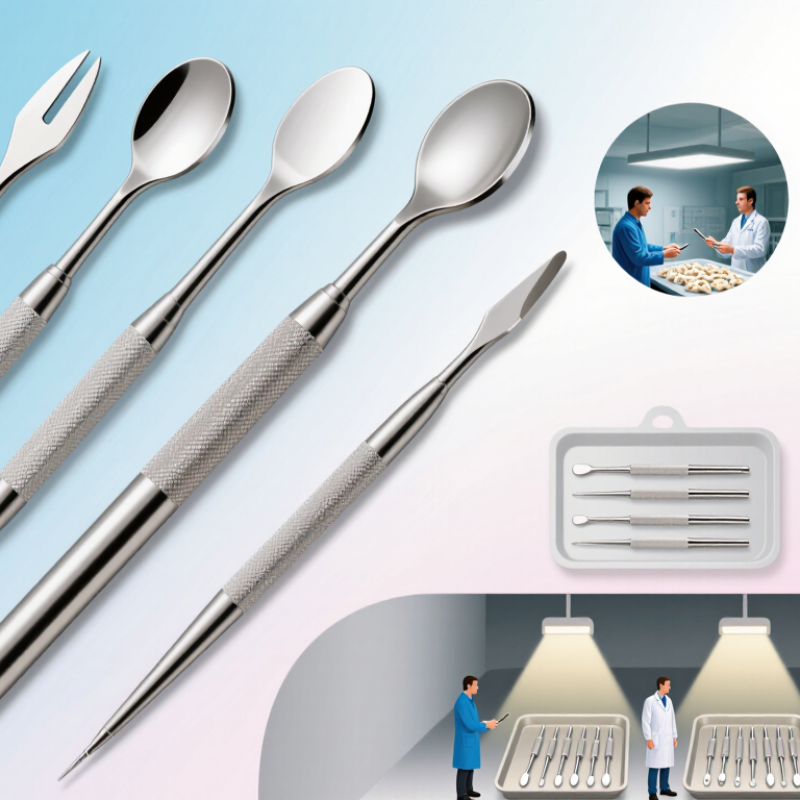
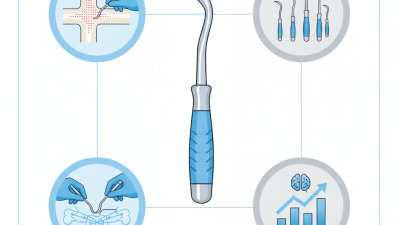
Bone curettes are hand instruments designed to remove tissue, debris, or diseased bone from confined surgical spaces. Their working ends may be spoon-shaped, looped, angled, or fenestrated. Each design creates a different balance between reach, visibility, and control. Sharp edges support precise debridement, while blunt edges reduce the risk of damaging nearby structures. Small details matter.

Straight curettes suit accessible surfaces and open procedures. Angled curettes help surgeons reach cavities, joint spaces, and irregular bone contours. Double-ended models can combine two working sizes in one instrument. Some procedures require rigid shafts for controlled pressure. Others benefit from lighter, more maneuverable designs. The best choice depends on anatomy, technique, and surgeon preference.

In orthopedic, neurosurgical, dental, and spinal procedures, curettes may assist with lesion removal, graft-bed preparation, or cleaning infected material. Experienced teams inspect the handle grip, edge consistency, shaft alignment, and surface finish before use. These checks can reveal manufacturing weaknesses early. Reusable instruments also require validated cleaning and sterilization processes. Not every attractive design performs well under pressure. Buyers should compare material specifications, dimensional accuracy, surgical feedback, and quality documentation. Clinical suitability cannot be judged from photographs alone.
Key Criteria for Evaluating Bone Curette Manufacturers

Top Bone Curette Manufacturers for Global Buyers

Selecting bone curette manufacturers requires more than comparing catalogue prices. Buyers should examine material quality, production controls, and clinical suitability. Stainless steel composition should be clearly documented, with resistance to corrosion after repeated cleaning. The working edge must remain precise without creating excessive tissue trauma. Fit matters. Handle geometry also deserves attention. A balanced curette can reduce hand fatigue during long procedures. Ask for evidence.

Reliable manufacturers provide batch traceability, inspection records, and consistent dimensional data. Their quality systems should cover raw materials, machining, polishing, cleaning, packaging, and final release. Independent testing can strengthen confidence in hardness, surface finish, and sterilization compatibility. Documentation should be clear enough for procurement and clinical teams. Vague certificates are warning signs. Regulatory documentation must match the destination market and intended use.

Communication reveals practical capability. Manufacturers should answer technical questions directly and explain production limits honestly. Samples can expose rough edges, uneven finishes, or uncomfortable grips before larger orders. Feedback from surgeons and sterile-processing staff is especially valuable, although it may be subjective. Do not rely on reviews alone. A polished presentation can still hide weak quality control. Conversely, a smaller supplier may offer careful engineering but lack stable capacity. That trade-off needs verification through audits, sample inspections, and delivery records. No manufacturer fits every hospital, and buyer checklists are never perfect. Revisit them after real-world use.

Top Bone Curette Manufacturers for Global Buyers - Key Criteria for Evaluating Bone Curette Manufacturers
Evaluation Criterion What Buyers Should Check Relevant Evidence or Standard
Regulatory status Confirm that the product’s intended use, classification, and market authorization are appropriate for each destination country. Check the manufacturer’s role and the legal entity named on applicable documents. Verify applicable market-specific records and certificates directly with the relevant regulatory authority. FDA establishment registration or device listing alone does not mean that FDA has approved a device.
Quality management system Assess whether the manufacturer maintains a quality system covering design, production, inspection, corrective actions, and supplier controls. Request a current ISO 13485 certificate, check its scope and issuing certification body, and confirm that it covers the relevant manufacturing site and product activities.
Material specification Request the specified alloy, material traceability, and evidence that materials are suitable for the instrument’s intended use and processing conditions. ASTM F899 and ISO 7153-1 provide material-related references for metallic surgical instruments; confirm the applicable grade and requirements in the product documentation.
Design and dimensions Compare curette tip shape, working-end size, shaft length, handle design, and tolerances with the buyer’s clinical and procurement requirements. Review controlled drawings, product specifications, and inspection records. Confirm that the supplied model and dimensions match the purchase order.
Manufacturing and finishing Ask how the working end and handle are formed and finished, and how defects such as burrs, cracks, or surface irregularities are detected and controlled. Review documented process controls, inspection criteria, and sample instruments. Suitability should be assessed against the product specification and intended use.
Performance and inspection Check that the curette is inspected for dimensional conformity, finish, and functional performance relevant to its design. Request inspection plans and representative test records. Acceptance criteria should be defined by the manufacturer’s controlled specifications and applicable requirements.
Reusable-instrument processing For reusable products, confirm that instructions explain the validated cleaning, disinfection, inspection, packaging, and sterilization steps needed before reuse. Review the instructions for use and applicable processing validation information. ISO 17664-1 addresses information manufacturers provide for processing critical and semi-critical medical devices.
Sterility and packaging Determine whether the product is supplied sterile or non-sterile. For sterile products, check the stated sterilization method, packaging integrity, and shelf-life information. Verify that packaging and sterilization claims are supported by applicable validation and labeling. Do not assume a product is sterile unless its labeling states so.
Traceability and labeling Check that product identification, lot or batch details, manufacturer information, and handling instructions are available and legible. Review sample labels and traceability records. UDI requirements and labeling obligations vary by market and product status.
Supplier reliability Evaluate lead times, production capacity, change notification practices, complaint handling, and the ability to support repeat orders. Use documented quality agreements, order history, service records, and written change-control procedures; confirm commitments during supplier qualification.
Documentation and communication Confirm that technical documents, instructions, and customer support are available in the languages and formats needed for the intended markets. Request current product specifications, instructions for use, applicable certificates, and a clear process for obtaining revised documents.

Leading Bone Curette Manufacturers for International Buyers

Top Bone Curette Manufacturers for Global Buyers

Leading Bone Curette Manufacturers for International Buyers

International buyers need bone curettes that perform consistently across demanding surgical settings. The World Health Organization reports that about 1.71 billion people live with musculoskeletal conditions worldwide. This burden supports continued demand for dependable orthopedic instruments, including curettes used in bone preparation and lesion removal.

The World Health Organization reports that about 1.71 billion people live with musculoskeletal conditions worldwide.

Supplier evaluation should begin with material traceability, edge geometry, handle balance, and sterilization compatibility. Stainless steel grades should be documented, not simply described as “surgical quality.” A reliable manufacturer should provide inspection records, dimensional tolerances, surface-finish details, and batch identification. ISO 13485 certification can support quality confidence, but it does not replace product-level verification.

Details matter.

Market forecasts also show expanding orthopedic demand. Grand View Research estimated the global orthopedic devices market at approximately USD 47 billion in 2023, with continued growth expected through the decade. However, market reports use different product definitions, so buyers should treat projections carefully. A curette supplier may appear strong in a broad device report but lack proven export experience. Ask for sterilization validation, packaging tests, sample evaluation, and destination-market documentation. One weakness remains easy to miss: catalog photographs rarely show tactile control. A sample should be tested with gloves, under realistic lighting, and after repeated cleaning cycles.

Quality Standards, Materials, and Sterilization Requirements

Top Bone Curette Manufacturers for Global Buyers

Quality Standards, Materials, and Sterilization Requirements

Reliable bone curette manufacturers should show evidence of controlled production, not only attractive product photographs. Buyers should request quality certificates, material traceability, inspection records, and risk-management documentation. ISO 13485 supports consistent medical-device production, while ISO 14971 helps address foreseeable clinical risks. These documents require careful review. A certificate alone proves little about each instrument.

Material selection affects strength, corrosion resistance, handling, and imaging compatibility. Surgical stainless steel, including suitable 316L grades, offers durability and familiar maintenance routines. Titanium can reduce weight and may help when magnetic sensitivity matters. The working edge should remain firm without becoming dangerously brittle. Surface finishing also deserves attention. A polished surface is not automatically easy to clean. Small scratches can retain organic debris after repeated procedures.

Sterilization requirements must match the curette’s intended use. Reusable instruments need validated cleaning instructions, including detergent type, water quality, brushing points, drying steps, and inspection limits. Steam sterilization is common when the instrument tolerates heat and moisture. Manufacturers should provide validated cycle parameters, packaging guidance, and compatibility data. Single-use devices must not be presented as reusable alternatives. In practice, instructions are sometimes too vague. Buyers should challenge unclear exposure times and missing reprocessing evidence. A sample audit, dimensional check, and several cleaning cycles can reveal problems that initial inspection misses. Reliable suppliers accept this scrutiny and maintain records for every production batch.

Top Bone Curette Manufacturers for Global Buyers: Quality Standards, Materials, and Sterilization Requirements

This comparison uses representative stainless-steel material grades commonly specified for reusable surgical instruments. Values are approximate midpoints of published ASTM composition ranges and should be verified against the supplier’s material certificate.

Quality and sterilization note: Surgical bone curettes should be supplied with documented material identification, cleaning instructions, and validated reprocessing guidance. Reusable devices are commonly processed using steam sterilization in accordance with applicable requirements such as ISO 17665, ISO 17664-1, and AAMI ST79.

Global Purchasing, Customization, and Supplier Verification

Top Bone Curette Manufacturers for Global Buyers

Global purchasing demands more than a low unit price. The Lancet Commission on Global Surgery estimated that five billion people lack access to safe, affordable surgical care. This gap makes dependable bone curettes important in hospitals with limited replacement options. Buyers should compare working-end geometry, shaft length, handle balance, and stainless-steel specifications. A curette should feel controlled, not merely sharp. Request dimensional drawings, surface-finish details, sterilization instructions, and lot-level traceability. Small details matter.

Customization can support pediatric procedures, minimally invasive access, or different bone densities. However, changing the cup angle or shaft length may affect cleaning and handling. Ask for prototype samples and simulated-use feedback before approving production. The WHO Global Patient Safety Action Plan 2021–2030 emphasizes safer systems and reliable medical-device processes. Supplier verification should reflect that principle. Check the ISO 13485 certificate scope, audit history, complaint process, and corrective-action records. Verify whether the certificate covers the actual manufacturing site. It often does not.

An experienced purchasing team should inspect sample markings under bright light. Look for burrs, uneven edges, stains, and loose joints. Confirm packaging integrity after transport testing. Review certificates for material composition and sterilization compatibility, not just promotional claims. Third-party inspection can compare random lots against approved drawings. It costs more. It may prevent costly recalls. Buyers should also document acceptance criteria in the purchase contract. I would not rely on a certificate alone. Supplier performance can change after the first successful shipment. Continuous sampling and annual reassessment remain necessary.