Pawsome-Specializing in vet health products since 2015

Inquiry
Form loading...
Pawsome-Specializing in vet health products since 2015
Veterinary Dental Implants are becoming a focused field within modern companion-animal dentistry. The need is practical: damaged teeth can affect chewing, comfort, nutrition, and daily behavior. The American Animal Hospital Association reports that periodontal disease affects most dogs and cats by three years of age. Its dental-care guidelines also stress regular examinations, professional cleaning, dental radiography, and individualized treatment planning.
The market is developing, but the evidence is uneven. Grand View Research identifies veterinary dental equipment as a growing segment, supported by rising pet ownership and stronger preventive-care spending. However, dental implant-specific data remains limited. That gap matters when comparing China Top 10 Veterinary Dental Implant Suppliers. Supplier quality should include implant material, surface treatment, dimensional accuracy, sterilization guidance, surgical instruments, and documented clinical support. Product photographs are not enough.
Dr. Brook A. Niemiec, a recognized veterinary dental specialist, has stated, “Periodontal disease is the most common clinical condition in adult dogs and cats.” His observation explains why implant discussions must begin with periodontal control, not product promotion. A stable implant requires healthy surrounding tissue, suitable bone, careful imaging, and trained veterinary supervision. Small details matter.
The uncomfortable point is simple: not every missing tooth needs an implant. Some animals benefit from extraction alone. Others may need advanced reconstruction. A responsible supplier should explain both options, report limitations, and support follow-up care. This introduction examines leading Chinese suppliers through that clinical and evidence-based lens. Their manufacturing claims deserve verification, not automatic trust.
China Top 10 Veterinary Dental Implant Suppliers
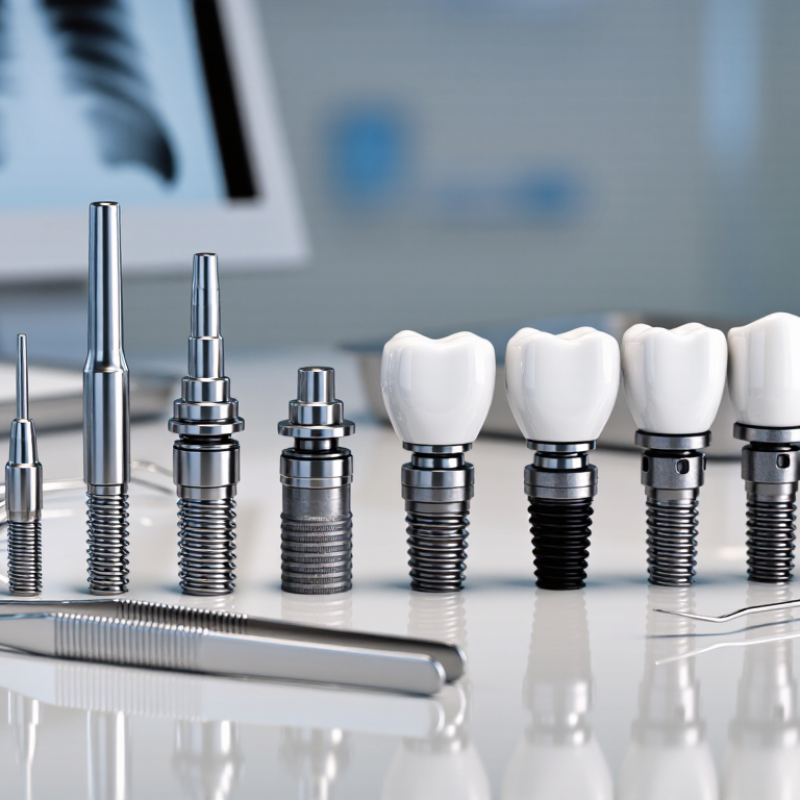
Veterinary dental implants replace missing teeth and help preserve jaw function. They may also reduce bone loss after extraction. In dogs with traumatic tooth loss, an implant can support normal chewing and oral comfort. Treatment begins with a complete oral examination, dental radiographs, and a review of systemic health. Purpose is not cosmetic.
Common types include endosseous implants, two-piece implants, and custom-supported designs. Endosseous implants sit inside the jawbone and usually require adequate bone volume. Two-piece systems can connect to different crowns or prosthetic components. Titanium is widely selected for its strength and tissue compatibility. However, surface design, thread shape, and surgical precision also affect stability. A reliable supplier should provide material certificates, batch traceability, sterilization records, and clear surgical instructions.
Clinical applications include fractured canine teeth, missing premolars, and selected jaw defects. Implants may restore biting function when extraction alone would compromise the animal’s daily activity. They are not suitable for every patient. Severe periodontal disease, poor bone quality, uncontrolled illness, or limited home care can increase failure risk. Pain management and infection control must follow veterinary guidance. Follow-up radiographs can reveal bone loss before visible loosening occurs. Long-term evidence remains uneven across species and implant designs. That matters. A careful clinician should explain uncertainty, not promise permanent success. When comparing Chinese suppliers, veterinary teams should assess clinical support, testing standards, customization capacity, and post-sale communication alongside price.
| No. | Dental Implant Category | Purpose and Definition | Common Clinical Application | Relevant Species | Key Clinical Considerations |
|---|---|---|---|---|---|
| 1 | Endosseous threaded implant | A screw-shaped implant placed directly into prepared alveolar bone to provide an anchor for a dental crown or prosthetic restoration. | Replacement of a missing tooth when preservation of chewing function and oral structure is clinically justified. | Primarily dogs; selected cases may involve cats and other small animals. | Requires adequate bone volume, controlled periodontal status, stable occlusion, and strict postoperative monitoring. |
| 2 | Single-tooth implant | A restoration supported by one implant that replaces one absent or non-restorable tooth without preparing adjacent teeth. | Replacement of a fractured, traumatically lost, or surgically extracted canine or incisor. | Most often reported in dogs, especially large and working breeds. | The treatment plan should consider root anatomy, bone density, bite forces, chewing habits, and the risk of implant overload. |
| 3 | Titanium implant | An implant manufactured from commercially pure titanium or a titanium alloy, selected for biocompatibility and bone integration characteristics. | General-purpose implant placement where mechanical strength and established implant protocols are required. | Commonly used in canine dental implant procedures. | Surface cleanliness, primary stability, implant positioning, and prevention of peri-implant infection are essential. |
| 4 | Ceramic or zirconia implant | A tooth-replacement implant made from a high-strength ceramic material, generally considered when metal-free rehabilitation is preferred. | Selected restorative cases requiring a ceramic-based implant and appropriate soft-tissue or esthetic management. | Use in veterinary patients is more limited than titanium and depends on clinician expertise and case selection. | Brittleness, limited veterinary evidence, surgical precision, and restoration design must be evaluated before use. |
| 5 | Immediate implant placement | Placement of the implant during the same surgical session as tooth extraction, when the socket and surrounding tissues are suitable. | Selected cases involving extraction of a non-restorable tooth with sufficient remaining bone and controlled infection. | Primarily dogs; suitability is determined on an individual basis. | Active infection, inadequate primary stability, severe bone loss, or uncontrolled periodontal disease may require delayed treatment. |
| 6 | Delayed implant placement | Placement performed after extraction-site healing and, when necessary, bone regeneration or soft-tissue management. | Cases with previous infection, compromised socket walls, insufficient bone, or a need for staged treatment. | Applicable to dogs and selected veterinary patients evaluated by a dental specialist. | Healing time, imaging results, bone quality, and the patient's ability to tolerate multiple anesthetic procedures must be assessed. |
| 7 | Bone-grafted implant site | An implant site supported by grafting or guided bone regeneration to improve deficient alveolar bone before or during implant placement. | Rehabilitation of sites with ridge resorption, traumatic bone loss, or inadequate width and height for stable implant placement. | Most relevant to canine teeth and other high-value teeth in carefully selected dogs. | Requires advanced imaging, stable graft containment, infection control, and a longer treatment timeline. |
| 8 | Implant-supported crown | A fixed crown attached to an osseointegrated implant to restore the visible tooth structure and functional contact. | Restoration of a missing canine or other strategically important tooth after adequate healing. | Dogs with suitable anatomy, health status, and owner commitment to follow-up care. | The crown must be designed to minimize excessive leverage and traumatic occlusal forces. |
| 9 | Implant-supported prosthetic restoration | A removable or fixed dental prosthesis stabilized by one or more implants rather than relying solely on natural teeth or soft tissue. | Limited and highly specialized rehabilitation when multiple teeth are absent and conventional options are inadequate. | Uncommon in routine veterinary dentistry; case selection is particularly important in dogs. | Maintenance, hygiene access, chewing behavior, prosthesis retention, and the need for repeated examinations must be planned. |
| 10 | Veterinary dental implant system | A coordinated set of implant fixtures, surgical instruments, abutments, healing components, and restorative parts designed for a complete treatment workflow. | Specialist-led implant surgery, restoration, and long-term follow-up in appropriately selected patients. | Primarily used in dogs; availability and clinical adoption vary by region and veterinary specialty practice. | Selection should be based on implant dimensions, compatible components, sterilization requirements, imaging support, and documented clinical suitability. |
Note: Veterinary dental implants are elective, case-dependent procedures. Diagnosis, imaging, periodontal assessment, anesthesia planning, surgical placement, restoration, and follow-up should be performed by appropriately trained veterinary dental professionals.