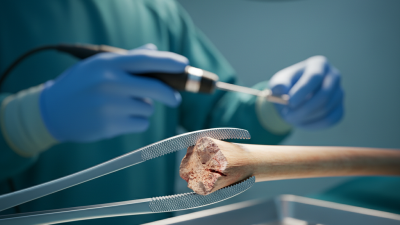
Pawsome-Specializing in vet health products since 2015
Choosing the right Bone Holding Forcep is not a minor purchasing decision. It affects fracture reduction, surgical control, reprocessing, and long-term operating costs. Global buyers need more than polished photographs and attractive prices.
The World Health Organization reports that the global population aged 60 years and older will reach 2.1 billion by 2050. More fragile bones may increase demand for dependable orthopedic procedures. The United Nations World Population Prospects 2024 also confirms this demographic shift. However, these reports do not measure forceps demand directly. That limitation matters. Procurement decisions should combine demographic evidence with hospital-level procedure data, surgeon feedback, and verified product testing.
Professor Maurice E. Müller, a pioneer of modern internal fixation, stated, “Reduction is the basis of fixation.” His principle remains practical today. A Bone Holding Forcep should provide stable grip without crushing bone or obstructing the surgical field. Buyers should examine jaw shape, ratchet security, surface finish, balance, and resistance to repeated sterilization. Stainless steel quality matters. So does traceable manufacturing under ISO 13485 systems. Reprocessing instructions should align with ISO 17664-1 requirements.
Small details often decide performance.
A narrow jaw may help in deep exposure, while broader serrations may improve control on dense cortical bone. Yet no universal model fits every procedure. That is where many buying guides become too confident. The best choice depends on anatomy, surgical technique, instrument sets, and local regulatory requirements. This article compares leading forceps options for global buyers, emphasizing documented quality, practical usability, and realistic total cost rather than marketing language.
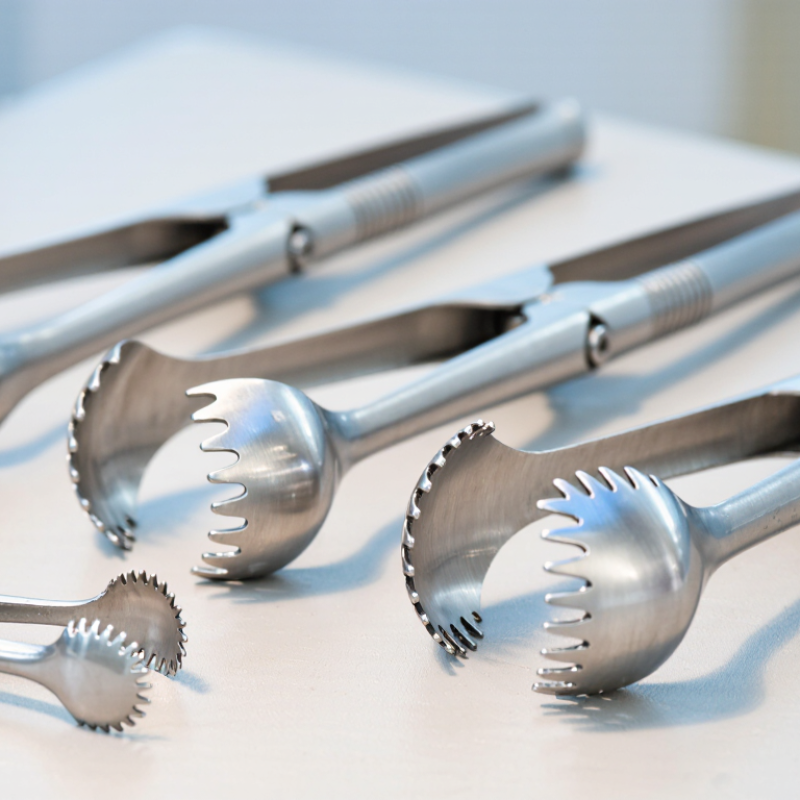
Bone holding forceps are designed to stabilize bone during reduction, fixation, or controlled manipulation. Their jaws grip cortical surfaces without requiring excessive hand pressure. Common designs include pointed, serrated, and broad atraumatic jaws. Pointed tips can hold dense bone firmly. Serrations improve resistance to sliding. However, they may mark fragile bone surfaces.
For global buyers, the best choice depends on anatomy, procedure, and handling technique. A narrow jaw may improve access in a confined surgical field. A broader jaw can distribute pressure across larger bone areas. Ratcheted handles provide controlled holding force, while non-locking patterns allow quick repositioning. Surgeons should assess balance, grip comfort, joint movement, and jaw alignment before purchase. Small manufacturing defects can affect control.
Material quality also matters. Surgical-grade stainless steel should resist corrosion, repeated processing, and surface wear. Suppliers should provide clear technical specifications, inspection records, and validated cleaning guidance. Forceps must be checked for loose hinges, damaged serrations, and uneven closure before use. Follow the facility’s sterilization procedures and the instrument maker’s instructions. A forceps that feels strong is not automatically suitable. This distinction is easy to miss. In practice, surgeon preference influences selection, but preference should not replace fit, inspection, and clinical evidence.
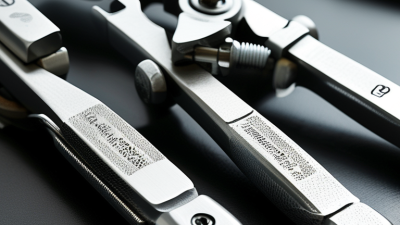
Bone holding forceps are selected by tissue, access, and required grip—not by appearance alone. Several designs serve different surgical problems. Pointed forceps provide concentrated contact for firm cortical bone. They are useful during fracture reduction and controlled fragment alignment. Their narrow tips can mark delicate surfaces, so pressure requires constant adjustment. Broad, serrated forceps distribute force more evenly. Surgeons often use them for larger bones or stable temporary positioning.
Verbrugge-style forceps offer curved jaws and strong leverage around irregular bone surfaces. Their shape can improve access in deep operative fields. Reduction forceps with pointed or toothed jaws help align fracture fragments before fixation. They work well when a small rotational correction matters. Self-retaining bone forceps maintain pressure without continuous hand squeezing. This can reduce fatigue, although excessive locking force may damage the cortex.
The application should guide the jaw design. A pelvic procedure may need long, angled handles, while hand surgery usually favors compact instruments. Serrations should hold securely without leaving unnecessary grooves. In practice, the best choice is rarely universal. Surgeons should consider bone density, fragment size, visibility, and the planned fixation method. Instrument balance also matters when gloves are wet. This detail is easy to overlook. Cleaning access, sterilization compatibility, and smooth joint movement affect reliability over repeated use. Inspect the tips carefully; even minor misalignment can weaken control.
| Instrument Type | Typical Design | Common Applications | Suitable Bone or Procedure | Key Buying Considerations | Typical Material |
|---|---|---|---|---|---|
| Lane Bone Holding Forceps | Strong, broad jaws with a ratchet locking mechanism; often available in straight or angled patterns. | Holding and manipulating bone fragments during reduction and fixation. | Long bones and larger bone fragments in orthopedic trauma procedures. | Jaw width, ratchet security, handle comfort, and access to the operative field. | Surgical stainless steel, commonly corrosion-resistant grades suitable for reusable instruments. |
| Verbrugge Bone Holding Forceps | Curved or angled serrated jaws designed to provide a firm grip while improving visualization. | Temporary stabilization, reduction, and positioning of bone during internal fixation. | Medium-to-large fragments, including shaft and metaphyseal bone. | Jaw curvature, serration profile, closing force, and compatibility with plate fixation workflows. | Surgical stainless steel with a satin or low-reflective finish. |
| Self-Centering Bone Holding Forceps | Opposing jaws or pointed tips designed to center a bone fragment as the instrument closes. | Accurate reduction and temporary fixation before drilling, plating, or screw insertion. | Small and medium fragments where alignment is important. | Tip geometry, alignment accuracy, atraumatic contact, and controlled locking. | Surgical stainless steel; some models include tungsten carbide inserts in the gripping areas. |
| Pointed Reduction Forceps | Narrow, pointed jaws that engage bone at selected contact points and provide focused reduction control. | Manipulation of fracture fragments and maintenance of reduction during fixation. | Fracture fragments with limited surface area or difficult access. | Tip sharpness, jaw symmetry, locking reliability, and risk of local bone damage. | Surgical stainless steel with precision-machined tips. |
| Atraumatic Bone Holding Forceps | Broad, contoured, or fenestrated jaws that distribute pressure over a larger contact area. | Holding bone while reducing the risk of crushing or marking the cortical surface. | Fragile, osteoporotic, thin cortical, or structurally important bone. | Surface contact area, smooth transitions, pressure control, and ease of cleaning. | Surgical stainless steel with smooth, polished or satin-finished contact surfaces. |
| Pelvic Bone Holding Forceps | Long, robust handles with curved or offset jaws designed for deep surgical access. | Reduction and stabilization of pelvic ring and acetabular fracture fragments. | Pelvic and acetabular bone, where greater reach and leverage are required. | Overall length, offset angle, jaw strength, visibility, and secure locking under load. | Surgical stainless steel designed for high mechanical strength and repeated sterilization. |
| Bone-Holding Forceps with Broad Jaws | Wide, curved jaws that distribute gripping pressure across a relatively large area. | General bone manipulation and temporary holding during orthopedic procedures. | Larger fragments and surfaces that require stable, distributed support. | Jaw opening, gripping surface, instrument balance, and compatibility with the intended anatomy. | Surgical stainless steel, usually with a corrosion-resistant reusable finish. |
| Small Bone Holding Forceps | Compact body with fine jaws for controlled handling in confined spaces. | Hand, foot, wrist, ankle, and other small-bone procedures. | Small fragments and delicate anatomical structures. | Fine tip alignment, tactile feedback, lightweight design, and atraumatic gripping. | Surgical stainless steel; fine working ends require precise finishing and inspection. |
| Large Bone Holding Forceps | Longer and heavier construction with reinforced jaws for substantial bone fragments. | Reduction and temporary stabilization in major orthopedic trauma surgery. | Femur, tibia, humerus, and other large-bone fracture fragments. | Load capacity, handle leverage, jaw durability, ratchet performance, and instrument weight. | High-strength surgical stainless steel suitable for repeated cleaning and sterilization. |
What Are the Top Bone Holding Forceps for Global Buyers?
Jaw design determines how bone holding forceps grip, guide, and protect surrounding tissue. Serrated jaws can resist sliding on firm cortical bone. Fine teeth may improve control during reduction. However, aggressive teeth can leave marks or damage fragile bone. A strong bite is not always better.
Jaw width also matters. Broad jaws spread pressure across a larger surface and may reduce concentrated stress. Narrow jaws can reach confined areas, but they require steadier handling. Curved jaws often improve visibility and access around a bone edge. Straight jaws can provide a more direct line of force. Small differences become important in deep or crowded surgical fields.
Fenestrated jaws may lower weight and improve visual access. Their openings can also reduce tissue compression when positioned carefully. The wrong angle can still trap soft tissue. That detail is easy to overlook. Buyers should examine tooth profile, jaw alignment, hinge smoothness, and handle control together. A polished finish does not prove reliable performance. Practical evaluation should include repeated opening, controlled pressure, secure locking, and cleaning after use. Some instruments feel precise at first but become stiff after processing. That possibility deserves attention. Clear material specifications, inspection records, and sterilization guidance support safer purchasing decisions across healthcare systems.
What Are the Top Bone Holding Forceps for Global Buyers?
Material and sterilization should guide every bone holding forceps purchase. Surgical-grade stainless steel, commonly specified under ISO 7153-1 and ASTM F899, offers corrosion resistance and repeated reprocessing performance. However, “stainless” is not a complete quality description. Buyers should request the exact alloy, hardness range, surface treatment, and passivation records. A rough jaw can damage bone and retain organic residue. A polished finish helps, but it does not prove reliability.
Sterilization compatibility is equally important. The CDC Guideline for Disinfection and Sterilization classifies surgical instruments as critical devices requiring sterilization. Its validated steam cycles commonly use 121°C or 132°C settings, depending on load and equipment. AAMI ST79 also stresses monitoring physical conditions, chemical indicators, and biological indicators. Packaging matters too. Hinges must open during cleaning, while locking mechanisms should not trap tissue. WHO’s Global Patient Safety Action Plan reports that about one in ten patients experiences harm in healthcare, with more than half considered preventable. Instrument quality is only one factor, but it remains a practical control point.
Tips: Ask for sample testing before volume orders. Check jaw alignment under bright light. Operate the ratchet repeatedly. Request sterilization validation, material certificates, and inspection records. Do not rely on photographs alone. Some buyers overlook handle comfort, especially during long procedures. That mistake deserves reconsideration. Suppliers should also explain repair limits, because repeated sharpening may change gripping force and jaw geometry.
What makes the top bone holding forceps is not only jaw strength. Global buyers should match the instrument with the procedure, bone size, and sterilization workflow. Serrated jaws may improve grip on dense cortical bone, while delicate, atraumatic patterns suit smaller fragments. Stainless steel grade, hinge alignment, ratchet control, and surface finishing deserve equal attention. A forceps that feels stiff on the first trial may become worse after repeated processing.
Supplier comparison needs measurable evidence. The World Health Organization reports that musculoskeletal conditions affect about 1.71 billion people worldwide, sustaining demand for dependable orthopedic instruments. However, volume alone should not guide purchasing. Request material certificates, dimensional drawings, inspection records, and validated cleaning instructions. ISO 13485-based quality systems can indicate controlled production, but certification does not guarantee excellent handling. Ask for samples and test grip, release, jaw symmetry, and corrosion after realistic sterilization cycles. Small details matter.
Tips: Build a weighted scorecard before requesting quotations. Give separate scores to holding force, atraumatic control, durability, documentation, delivery consistency, and warranty support. Compare total cost per usable cycle, not unit price. A cheaper instrument can become expensive after early hinge wear. Also check whether replacement parts and service records are available locally. This point is often missed. Buyers should record failures, even minor ones, because supplier claims may look stronger than daily operating evidence.