Pawsome-Specializing in vet health products since 2015
Choosing a Tplo Plate Dog is not a simple matter of selecting the largest plate or the lowest price. The implant must match the dog’s tibial shape, body weight, activity level, and surgical plan. A working Border Collie needs different mechanical support from a small, older Poodle. That difference matters.
Veterinary orthopedic surgeon Dr. David Dycus emphasizes, “The best implant is the one that matches the patient and the surgeon’s plan.” This principle guides our seven practical tips. We examine plate size, stainless steel or titanium construction, locking-screw design, contour accuracy, hole placement, and manufacturer quality. We also consider the surgeon’s familiarity with each system. A technically advanced plate can still fail when poorly selected or incorrectly positioned.
Look closely at the details.
The plate should sit smoothly against the proximal tibia, without unnecessary gaps or pressure points. Its screws must achieve dependable purchase in the available bone. Radiographs, tibial plateau angle, and postoperative restrictions remain essential. Hardware alone cannot guarantee recovery. That is easy to forget.
This guide also acknowledges an uncomfortable point: no plate is perfect for every dog. Evidence, surgical experience, and honest case assessment should shape the decision. Owners should ask about implant testing, complication rates, revision options, and rehabilitation planning. A reliable choice balances biomechanics with practical aftercare. The right Tplo Plate Dog supports stability, but careful surgery and patient recovery complete the result.
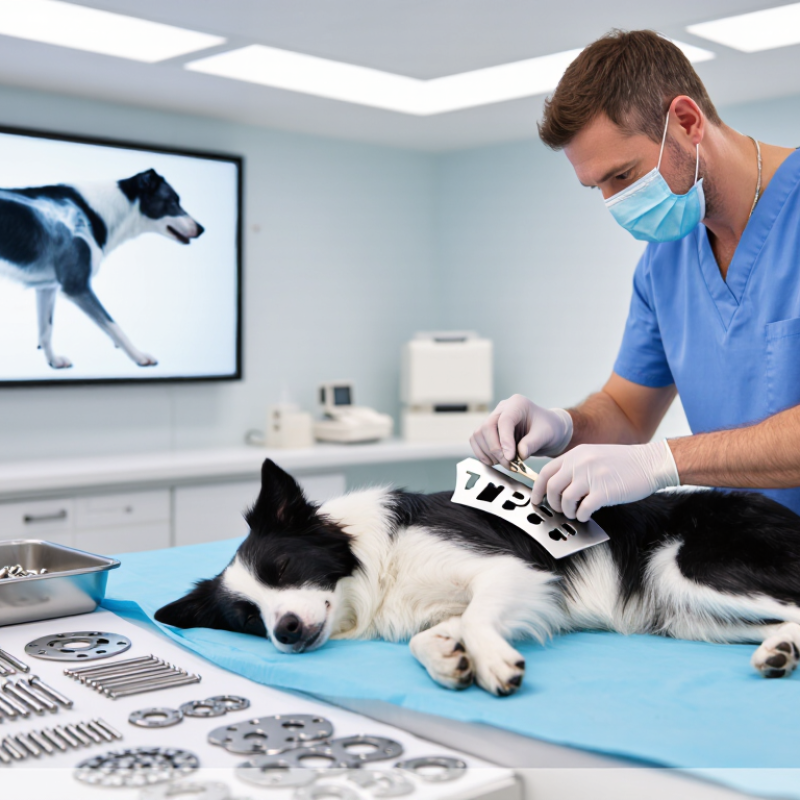
Understanding TPLO plates helps owners follow the surgical plan more confidently. A TPLO plate stabilizes the reshaped tibia while bone healing develops. It does not repair the knee alone. Surgical technique, accurate measurements, and careful aftercare also influence recovery. Veterinary surgeons usually assess radiographs, body weight, bone shape, and activity level before selecting a plate. Small details matter.
Tip 1: Match the plate to the dog’s bone size. An oversized plate may irritate nearby tissue. An undersized plate may not provide enough support.
Tip 2: Check the plate’s contour. A close fit can reduce bending during surgery. Poor contouring may create pressure points.
Tip 3: Ask about locking and conventional screw options. Each system has different benefits for bone quality and fracture stability.
Tip 4: Consider the dog’s activity. A working dog may need a different fixation strategy than a quiet senior companion.
Tip 5: Review the tibial slope and cut location. These measurements guide plate positioning.
Tip 6: Discuss implant material and tissue tolerance. Stainless steel and titanium have different properties.
Tip 7: Confirm follow-up imaging plans. Healing cannot be judged by enthusiasm alone.
A practical consultation should include the dog’s weight, age, previous injuries, and home environment. Even experienced surgeons may adjust the plan after seeing the bone directly. That is normal. No plate is ideal for every patient. Owners should ask how the chosen plate supports early stability, limits soft-tissue irritation, and fits the surgeon’s experience. Strict rest remains essential, even when the incision looks clean.
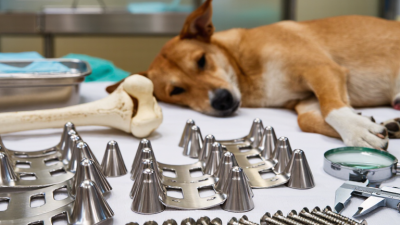
A TPLO plate should match the dog, not only the knee. Large dogs may need thicker, longer plates with stronger screw fixation. Small dogs often require narrower profiles to protect limited bone and soft tissue. A plate that looks “strong enough” may still be poorly suited to the tibial shape.
Tip 1: Measure carefully. Tibial width, plateau angle, bone quality, and limb alignment guide plate selection. The American College of Veterinary Surgeons emphasizes patient anatomy and surgical planning when treating cranial cruciate ligament disease. Published TPLO studies commonly report complication rates of about 10–30%, depending on case type, technique, and follow-up.
Tip 2: Match the plate to activity. A calm senior dog may place different demands on fixation than a young working dog. Running, jumping, slippery flooring, and early overuse can increase mechanical stress. Veterinary literature also links body weight and postoperative management with recovery risk. These are not perfect predictions. Individual healing can be surprisingly uneven.
Tip 3: Ask about imaging and fit. Radiographs should show whether the plate follows the tibial contour without excessive prominence. Working dogs may need robust fixation, but bigger is not automatically better. Excess material can irritate soft tissue or complicate later assessment. A 2022 review in Veterinary Surgery described implant selection as part of a broader plan involving anatomy, load, bone healing, and rehabilitation.
The most reliable choice comes from a veterinary surgeon’s measurements, not online size charts. Recovery plans matter as much as metal.
Choosing a TPLO plate means comparing material, geometry, and fixation—not just price. Tip 1: Match the plate to the dog’s bone size and tibial anatomy. Stainless steel offers high strength and familiar handling. Titanium is lighter and generally more compatible with MRI imaging. However, material alone does not prevent failure. Tip 2: Ask your surgeon about bending, stiffness, and screw-hole accuracy. A poorly contoured plate can create gaps under the bone.
Tip 3: Compare plate shapes carefully. Broad plates can distribute force across more bone, while narrow designs may suit smaller tibiae. Tip 4: Check locking fixation. Locking screws can improve angular stability, especially when bone quality is reduced. Conventional screws may still provide excellent compression when placed correctly. Small details matter. Tip 5: Review the screw pattern around the osteotomy. Even spacing can reduce stress concentration and protect the healing cut. Published veterinary case series commonly report TPLO complication rates near 10–30%, depending on patient size, technique, and follow-up period. These figures come from peer-reviewed outcome reports, not sales claims.
Tip 6: Confirm the plate supports the planned tibial plateau angle. A suitable design should allow accurate positioning without forcing the surgeon into compromises. Tip 7: Consider surface finish and corrosion resistance, then discuss removal policies. The American College of Veterinary Surgeons emphasizes precise planning, stable fixation, and postoperative monitoring. My practical caution is simple: the most expensive plate is not automatically the best. Radiographs, surgeon experience, implant fit, and the dog’s activity level should guide the final choice. Mistakes happen. Good planning reduces them.
| Selection Tip | Plate Material | Shape and Profile | Fixation Features to Compare | Clinical Advantages and Limitations | Practical Check |
|---|---|---|---|---|---|
| 1. Match the plate to the dog's size and bone anatomy | Implant-grade stainless steel or titanium alloy | Pre-contoured proximal tibial shape; available in size-specific lengths and widths | Appropriate hole spacing, sufficient working length, and secure purchase in the proximal and distal tibia | A correctly sized plate distributes load more effectively and reduces the need for excessive contouring. An oversized plate may cause soft-tissue irritation, while an undersized plate may not provide adequate stability. | Use patient measurements and the surgeon's preoperative planning rather than weight alone. |
| 2. Compare stainless steel with titanium | Stainless steel generally has high strength and stiffness; titanium is lighter and more modulus-compatible with bone | Both materials can be manufactured in conventional or locking plate designs | Confirm compatibility between the plate and the selected screw system; do not mix incompatible systems | Stainless steel is widely used and offers strong mechanical performance. Titanium can reduce implant weight and is highly corrosion resistant, but it may be more susceptible to surface damage from improper handling. | Choose one validated implant system and follow its handling and sterilization instructions. |
| 3. Select the appropriate plate shape | Material choice should support the selected contour and fixation design | Curved, anatomically contoured plates are designed to follow the medial proximal tibia; low-profile designs may reduce prominence | Check whether the plate provides adequate contact, contour, and coverage without interfering with the patellar ligament or joint region | Anatomical contouring can improve fit and reduce intraoperative bending. A poor fit may create soft-tissue pressure, alter alignment, or leave insufficient room for secure screws. | Compare the plate with imaging and the exposed tibial anatomy during surgical planning. |
| 4. Decide between locking and conventional fixation | Available in stainless steel or titanium depending on the system | Locking plates may be pre-contoured and used as fixed-angle constructs; conventional plates depend more on plate-to-bone compression | Locking screw threads engage the plate; conventional screws compress the plate against bone; some systems combine both options | Locking constructs can maintain alignment in reduced or weaker bone and may require less plate-to-bone compression. Conventional fixation can provide strong compression when bone quality and screw placement are suitable. | Choose based on bone quality, fracture or osteotomy configuration, and the surgeon's fixation strategy. |
| 5. Evaluate screw-hole layout and fixation capacity | Material should tolerate the planned screw load without deformation | Hole placement should support fixation on both sides of the tibial osteotomy and avoid critical anatomical structures | Compare the number of holes, locking or non-locking options, screw diameter, thread engagement, and available bicortical purchase | Adequate fixation points improve construct stability. Too few screws, poor purchase, or excessive concentration of holes near the osteotomy may reduce mechanical reliability. | Confirm that the planned screws will not enter the joint, interfere with the osteotomy, or compromise the cranial tibial cortex. |
| 6. Consider low-profile and soft-tissue characteristics | Both titanium and stainless steel can be produced in low-profile designs | Rounded edges, tapered ends, and reduced thickness may limit implant prominence | Look for smooth transitions, secure screw seating, and a design that minimizes contact with the patellar ligament and surrounding tissues | Lower prominence may reduce irritation and improve comfort, but reducing plate thickness must not compromise the strength required for the patient's load and activity level. | Balance profile, rigidity, and coverage; a thin plate is not automatically the best plate. |
| 7. Verify imaging, instrumentation, and postoperative support | Use only an implant material and system supported by appropriate surgical instrumentation | The plate should be compatible with the available guides, drill sleeves, bending tools, and radiographic assessment | Check drill-guide accuracy, screw-length options, instrument fit, radiographic visibility, and availability of backup implants | System compatibility helps reduce avoidable surgical delays and placement errors. Implant selection alone cannot replace accurate osteotomy execution, alignment, aseptic technique, and postoperative restriction. | Have the required sizes, screws, instruments, and contingency options available before surgery. |
Choosing a TPLO plate for a dog is not only a matter of shape or price. Surgical compatibility must come first. The plate should match the dog’s tibial anatomy, bone size, correction angle, and planned screw positions. Preoperative radiographs help the veterinary surgeon assess these details. A plate that fits one tibia may be unsuitable for another.
Tip 1: Ask whether the plate works with the surgeon’s instruments and preferred technique. Compatibility includes drill guides, screw sizes, bending tools, and sterilization procedures. The operating team should confirm these points before surgery day. Small mismatches can create stressful delays. They can also affect surgical precision.
Tip 2: Evaluate veterinary expertise, not just equipment. A qualified veterinary orthopedic surgeon should explain the TPLO plan, possible complications, and expected recovery. Ask how often the team performs this procedure and who will manage follow-up visits. Clear answers matter. Vague confidence does not replace training.
Tip 3: Discuss the dog’s individual risks. Age, weight, bone quality, limb alignment, and existing joint disease may influence plate selection. The surgeon should review imaging with you, preferably showing where the plate and screws will sit. I have learned that a visually impressive plate is not always the safest choice. Fit must be proven clinically.
Postoperative care also reflects compatibility. Confirm activity restrictions, pain monitoring, wound checks, and rehabilitation support. Even excellent implants can fail when follow-up is unclear. Ask what signs require an urgent call. Your veterinarian’s practical experience remains central.
Evaluating Quality, Safety, Cost, and Long-Term Support
Choosing a TPLO plate should begin with surgical fit, not price.
1. Confirm the plate matches the dog’s tibial anatomy and planned correction.
2. Request material documentation, batch traceability, and evidence of biocompatibility testing. ISO 10993 provides a useful framework for evaluating biological safety. Strong metal alone is not enough.
3. Examine hole design, screw compatibility, edge finishing, and resistance to bending. Published canine TPLO studies in Veterinary Surgery commonly report complication rates around 10–30%, although definitions and follow-up periods differ. That variation deserves caution.
4. Compare total cost, including screws, instruments, imaging, revision surgery, and rehabilitation. The cheapest implant may create expensive problems later.
5. Ask how the surgical team manages plate infection, loosening, or delayed healing. The 2022 AAHA Pain Management Guidelines emphasize structured monitoring, reassessment, and individualized recovery plans. A plate cannot replace careful aftercare.
6. Check whether technical support remains available after purchase. Clear surgical guides, responsive representatives, and accessible replacement components can matter during an unexpected case.
7. Review long-term evidence, not only laboratory strength tests. The FDA’s MAUDE database can reveal reported device problems, but it cannot calculate true complication rates. This limitation is easy to overlook.
I would also question impressive claims without independent testing. Some decisions still age badly. A veterinarian should weigh bone quality, activity level, infection risk, and owner finances before selecting the implant.